Aert Medical
Aert Medical
Aert Medical
Explore our primary inventory of advanced imaging devices engineered for hospitals, surgical centers, and emergency units worldwide.
The global healthcare ecosystem is experiencing a seismic paradigm shift. The demand for advanced patient imaging solutions—spanning high-definition Computed Tomography (CT), Magnetic Resonance Imaging (MRI), Digital Radiography (DR), and intraoperative surgical navigation—has escalated beyond traditional centralized hospital radiologic departments. Today, healthcare providers require decentralized, point-of-care, and mobile imaging systems that bring rapid diagnostic accuracy directly to the bedside, emergency vehicles, and remote field clinical sites.
China has rapidly evolved from a component manufacturing hub into the world’s leading innovative center for advanced patient imaging technology, factory manufacturing, and worldwide export. Driven by substantial domestic R&D investments, university-industry collaborative ecosystems, and complete upstream-downstream supply chains, Chinese original equipment manufacturers (OEMs) and original design manufacturers (ODMs) offer international procurement managers, hospital networks, and distributors an unparalleled strategic advantage: **world-class diagnostic precision combined with superior cost efficiency and structural modularity.**
This comprehensive industry whitepaper examines the core structural capabilities, technical breakthroughs, clinical localization scenarios, and strategic wholesale procurement pathways across Chinese medical imaging export hubs. By examining specialized manufacturers such as Wenzhou Aert Medical Co., Ltd., we reveal how cutting-edge photon-counting detectors, proprietary balance motion control systems, and ultra-low-field point-of-care MRIs are reshaping patient outcomes globally.
To understand the competitive edge of modern Chinese imaging exporters, one must evaluate the deep engineering breakthroughs across hardware components, software algorithms, and microelectronics integration.
Traditional Cone Beam CT (CBCT) systems provide compact physical footprints but often suffer from lower spatial resolution and scan speeds compared to multi-slice spiral CTs. Leading Chinese R&D facilities have developed proprietary "Automation Balance Systems" that seamlessly bridge CBCT and multi-detector spiral CT architectures.
By dynamically balancing movement vectors during rapid rotation, these advancements elevate CBCT diagnostic capabilities to match traditional 64-slice spiral CT systems while drastically reducing dose radiation and maintenance overhead.
While high-field 1.5T and 3.0T superconducting magnets remain essential for deep tissue structural studies, point-of-care emergency rooms and neurosurgical suites require instant mobility without complex helium-cooling maintenance.
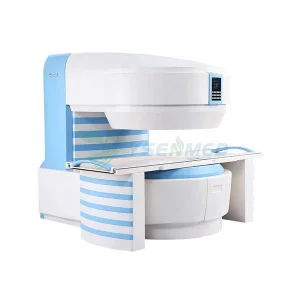
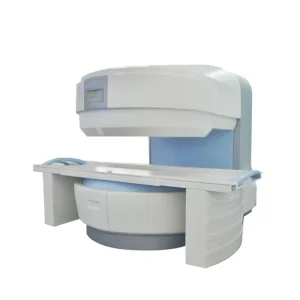
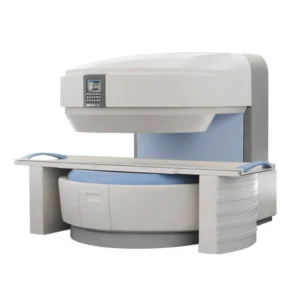
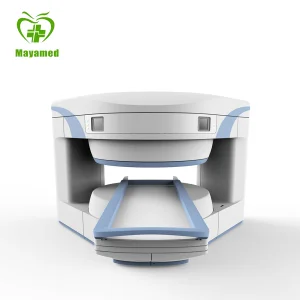
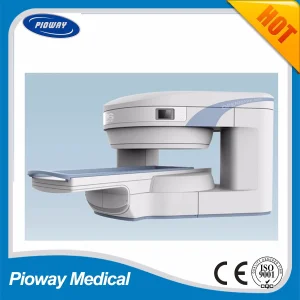
Chinese exporters lead the development of 0.35T to 0.42T permanent magnet open MRIs and specialized ultra-low-field mobile head MRIs. These systems operate with low power requirements, zero cryogen risks, and minimal fringe fields, making intraoperative stroke assessment and neuro-navigation routine and cost-effective.
The heart of digital imaging performance lies within detector physics. Specialized microelectronics subsidiaries in China are pioneering the transition from indirect conversion flat-panel detectors to direct CMOS flat-panel detectors and advanced Photon Counting Detectors (PCDs).
Photon counting technology measures individual X-ray photons, eliminating spectral overlap, increasing signal-to-noise ratio (SNR), and enabling multi-energy tissue characterization at significantly lower radiation doses.
Dose Efficiency: Modern Chinese mobile CT platforms utilize adaptive tube current modulation combined with iterative reconstruction algorithms (e.g., model-based iterative reconstruction), reducing patient radiation dose exposure by 30% to 50% compared to legacy systems.
System Footprint: By removing helium compressor chillers and reducing shield room dependencies, mobile MRI units engineered in Chinese specialized factories achieve operational readiness within footprints as small as 12 square meters, or directly inside self-propelled containerized platforms.
About Wenzhou Aert Medical Co., Ltd.
Wenzhou Aert Medical Co., Ltd. is a high-tech enterprise focused on the research, development, production, and sales of mobile CT, mobile MRI, and digital X-ray detectors. Headquartered in Wenzhou, Zhejiang Province, the company has multiple research and development centers and collaborates with renowned domestic and international scientific research institutions and universities to drive the advancement of intelligent medical devices globally.

The company is dedicated to providing mobile CT and mobile MRI solutions for various application scenarios, breaking through the core technologies of traditional devices and continuously upgrading them. Our equipment is widely applicable in hospital bedside, ambulance, mobile medical vehicles, and battlefield medical care, meeting the diagnostic needs in complex environments. Our mobile CT products are characterized by low radiation, easy mobility, simple operation, and high-definition image quality. They are extensively used in orthopedics, joint care, chest care, stroke, and other clinical specialties, greatly improving diagnostic efficiency and patient treatment experience.
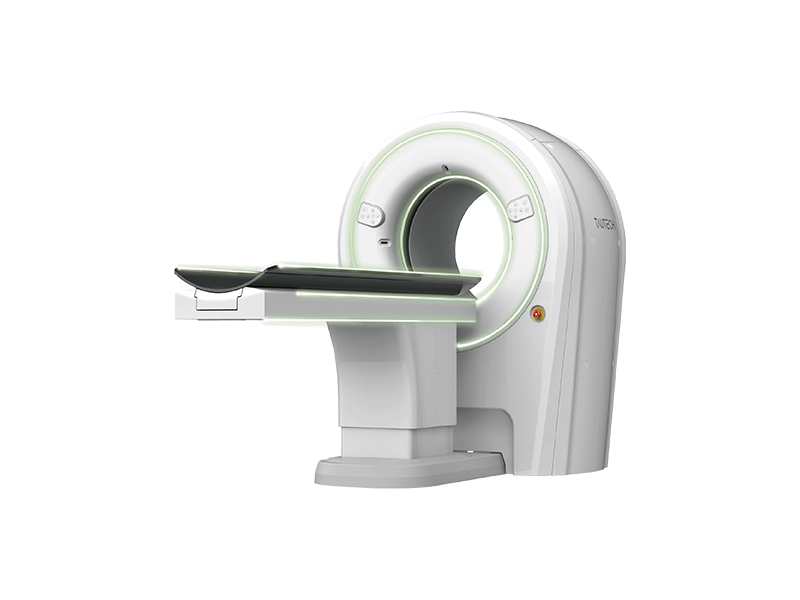
Aert Medical has independently developed the "LingTong" and "Ark" mobile CT series, each with distinct technical directions. These products, with their low radiation, mobility, high-quality images, and ease of use, meet the diagnostic needs in various clinical settings, including hospitals, health check-up centers, and emergency rescue scenarios. Our self-developed "Automation Balance System" has seamlessly integrated CBCT technology with spiral CT technology, which is expected to elevate CBCT performance to be comparable to 64-slice spiral CT.
In addition, Aert Medical is actively developing a low-field mobile MRI, which is not only compact, with short scanning times, but also offers complete scanning sequences and high image quality, enabling quick diagnosis of the head, spine, joints, and breast. Our upcoming ultra-low-field head mobile MRI will be widely used in neurosurgical operating rooms to provide precise surgical navigation and diagnostic support for stroke patients.
Aert Medical's subsidiary, Wenzhou Aert Microelectronics Technology Co., Ltd., specializes in the design and development of image sensors, gathering a team of experienced experts in the field. The CMOS flat-panel detectors currently under development will provide strong support as core components for mobile CT devices. Additionally, the photon counting detectors under development are at the forefront of global technology, and their successful development will position Aert Microelectronics among the leading companies in medical chip R&D.
Mission and Vision
We adhere to the philosophy of "Excellence in Medical Devices, Integrity in Protecting Life" and actively respond to the "Healthy China" initiative. Aert Medical is committed to improving diagnostic capabilities at the grassroots level of healthcare, enhancing the construction of medical alliances in urban and rural areas, and promoting the sharing of medical resources at all levels. We strive to meet the healthcare needs of people across different regions and continue to contribute to the global advancement of the medical industry.
Future Outlook
Aert Medical combines technological innovation with humanistic care, continuously focusing on product breakthroughs and market expansion. We aim to become a global leader in mobile medical equipment manufacturing, promoting the widespread adoption of intelligent medical devices, and making significant contributions to the development of global healthcare.
Modern clinical workflows require imaging systems tailored to specialized environments. Chinese manufacturing hubs design modular equipment adapted to diverse global scenarios:
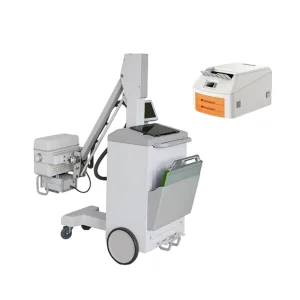
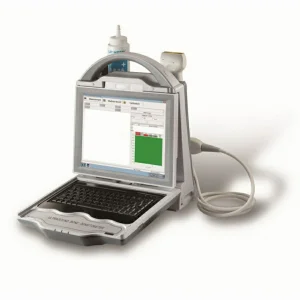
Critically ill patients cannot be easily transported to radiology departments without severe risks. Mobile 32kW X-ray units and mobile CT scanners allow high-resolution chest, abdominal, and cranial evaluations directly at the bedside, eliminating patient transit trauma.
"Time is brain" in ischemic vs. hemorrhagic stroke diagnosis. Self-propelled mobile CT platforms and compact mobile MRIs installed inside customized emergency ambulances allow pre-hospital thrombolysis administration, dramatically reducing time-to-treatment windows.
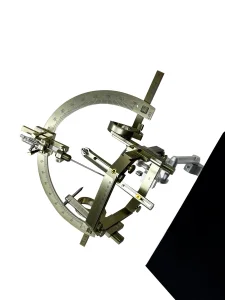
Operating suites demand high-precision real-time verification. Ultra-low-field head mobile MRIs and stereotactic navigation-assisted systems (compatible with Gamma Knife protocols) empower neurosurgeons to confirm tumor resection margins before closing the patient.
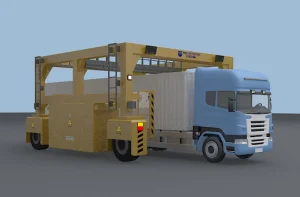
In remote areas or field environments, hydraulic drive self-propelled containerized X-ray scanning and dust-free mobile MRI systems operate independently of permanent infrastructure, utilizing integrated generator packs and ruggedized shock absorption chassis.
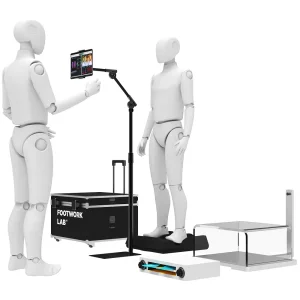
For specialized orthopedic insoles manufacturing and podiatry clinics, portable USB-interface foot scanners and podoscopes generate precise 3D optical and volumetric templates for rapid custom orthotic fabrication.
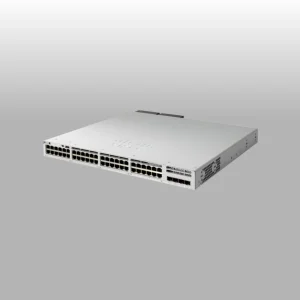
Advanced patient imaging requires seamless DICOM data transmission. Integrated SD-WAN edge router platforms (such as C8500 platforms with 12xSFP+ ports) facilitate secure, low-latency transmission of large 3D volumetric datasets from mobile units to hospital cloud networks worldwide.
When evaluating global export partners for advanced patient imaging solutions, healthcare executives must look beyond upfront factory gate pricing (FOB) and evaluate long-term Total Cost of Ownership (TCO), regulatory compliance, component availability, and customization (OEM/ODM) pathways.
| Evaluation Parameter | Legacy Western OEMs | Leading Chinese Exporters (e.g., Aert Medical) | Strategic Advantage for Global Buyers |
|---|---|---|---|
| Capital Expenditure (CapEx) | High baseline price ($1.2M - $2.5M for MRI/CT) | Optimized wholesale cost ($450K - $950K equivalent) | Faster ROI, enabling multi-unit regional deployment |
| Helium & Cryogen Needs | Requires regular liquid helium refills & cold-head service | Permanent magnets / Low-cryogen low-field options available | Zero risk of quench events; minimal maintenance costs |
| Site Preparation Requirements | Extensive copper/lead shielding & heavy structural reinforcement | Self-shielded mobile cabins, lightweight bedside form factors | Rapid installation within days rather than months |
| Component Traceability | Proprietary closed systems with locked spare parts supply | Open architecture, alternative component transparency | Reduced downtime with accessible global replacement modules |
| Software & AI Integration | Subscription-based recurring licensing models | Bundled DICOM 3.0 software, open AI SDK integration | Eliminates predictable software expansion fees |
| International Compliance | FDA 510(k), CE Marked | CE Certified, ISO 13485, NMPA, regional registrations | Full regulatory alignment for seamless import clearance |
The patient imaging industry is entering an era defined by artificial intelligence, micro-semiconductor innovations, and decentralized delivery models. Chinese advanced imaging factories are at the forefront of several macro trends:
Imaging hardware is increasingly coupled with deep-learning algorithms installed directly on edge compute modules. Automatic stroke hemorrhage identification, lung nodule segmentation, and bone fracture recognition occur within seconds of image acquisition.
The global healthcare system is moving away from sole reliance on centralized high-field MRIs. Portable ultra-low-field MRIs are expanding into neuro-ICUs, neonatal units, and remote clinics, offering safer, lower-cost scanning without fringe field risks.
The shift toward CMOS flat-panel detectors and photon-counting detectors (PCD-CT) will make multi-energy spectral imaging standard across basic mobile CT platforms, lowering diagnostic uncertainty and radiation exposure globally.
Reputable Chinese manufacturers maintain full compliance with international standards. Products generally carry **CE Mark certifications**, **ISO 13485** medical device quality management system certification, and compliance with **IEC 60601** electrical safety standards. Specific devices also maintain NMPA approvals and regional market clearances for seamless import in Europe, South America, Southeast Asia, and the Middle East.
Advanced image quality is maintained through modern signal processing, direct-conversion CMOS detectors, and iterative reconstruction algorithms. By optimizing the Signal-to-Noise Ratio (SNR) electronically and utilizing precise mechanical motion control (such as Aert Medical’s Automation Balance System), low-field MRIs and low-radiation mobile CTs deliver sharp diagnostic detail comparable to traditional multi-slice systems without requiring high radiation doses or high superconducting magnet costs.
Leading factories offer comprehensive OEM/ODM services. Overseas procurement partners can request customized exterior housing designs, localized UI software languages, tailored DICOM/PACS integrations, specialized chassis for mobile medical vehicles or container units, and custom hardware configurations (e.g., specific detector sizes or alternative component suggestions).
Containerized and mobile self-propelled systems are engineered as turnkey solutions. Pre-assembled and tested within dust-free factory facilities, these units arrive on-site fully calibrated. Installation typically requires establishing power connectivity and baseline network setup, allowing clinical operations to begin within 48 to 72 hours of arrival.
Modern Chinese imaging platforms incorporate remote telemetry and cloud diagnostic portals (often leveraging robust SD-WAN edge platforms). Manufacturers provide over-the-air (OTA) software patches, remote system diagnostics, DICOM 3.0 protocol synchronization, and 24/7 technical support to resolve operational queries instantly.
Permanent magnet open MRIs operate with significantly lower ongoing operational costs. They require **no liquid helium refills**, consume far less electrical power, do not require complex chiller loops, and eliminate quench hazards. This drastically reduces lifetime operational expenditure, making them highly suited for budget-conscious hospitals and specialized orthopedic or neurological clinics.
Browse our extended product portfolio for mobile CT, open MRI systems, bedside X-ray units, and auxiliary equipment.