Aert Medical
Aert Medical
Aert Medical
Explore high-precision diagnostic and surgical hardware solutions engineered by verified top-tier manufacturing facilities.
Analyzing the Paradigm Shift Toward Minimally Invasive Devices, Intraoperative Robotics, and AI-Driven Surgical Guidance
Modern surgical instrument factories are evolving from traditional forging shop floor designs into high-tech robotic integration centers. Micro-actuation systems and sensor-embedded end-effectors now require sub-micron precision to interface seamlessly with surgical robot arms.
Surgical instruments are no longer isolated mechanical hand tools. Top factories are actively integrating optical tracking, high-speed camera sensors, CBCT, and low-field MRI technologies directly into the surgical workflow for real-time tissue tracking.
With the full implementation of EU MDR 2017/745 and FDA 21 CFR Part 820 quality systems, manufacturing plants must deliver complete traceability, cleanroom validation, bio-compatibility certifications, and material purity assurance.
About Wenzhou Aert Medical Co., Ltd.
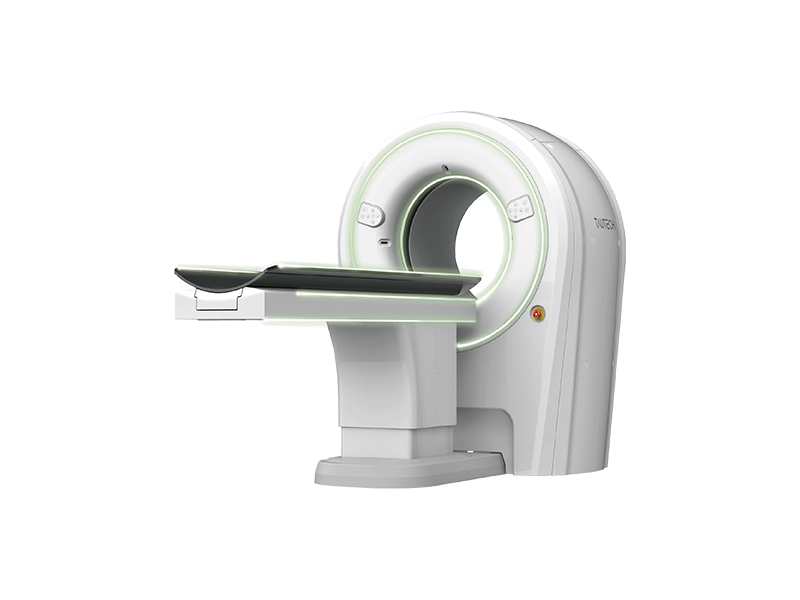
Wenzhou Aert Medical Co., Ltd. is a high-tech enterprise focused on the research, development, production, and sales of mobile CT, mobile MRI, and digital X-ray detectors. Headquartered in Wenzhou, Zhejiang Province, the company has multiple research and development centers and collaborates with renowned domestic and international scientific research institutions and universities to drive the advancement of intelligent medical devices globally.
Excellence in Action: Pioneering the integration of mobile diagnostic systems into emergency, surgical, and bedside clinical applications.

Products and Applications
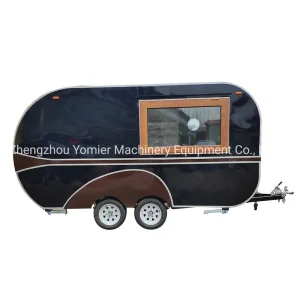
The company is dedicated to providing mobile CT and mobile MRI solutions for various application scenarios, breaking through the core technologies of traditional devices and continuously upgrading them. Our equipment is widely applicable in hospital bedside, ambulance, mobile medical vehicles, and battlefield medical care, meeting the diagnostic needs in complex environments. Our mobile CT products are characterized by low radiation, easy mobility, simple operation, and high-definition image quality. They are extensively used in orthopedics, joint care, chest care, stroke, and other clinical specialties, greatly improving diagnostic efficiency and patient treatment experience.
Research and Technological Advancements
Aert Medical has independently developed the "LingTong" and "Ark" mobile CT series, each with distinct technical directions. These products, with their low radiation, mobility, high-quality images, and ease of use, meet the diagnostic needs in various clinical settings, including hospitals, health check-up centers, and emergency rescue scenarios. Our self-developed "Automation Balance System" has seamlessly integrated CBCT technology with spiral CT technology, which is expected to elevate CBCT performance to be comparable to 64-slice spiral CT.
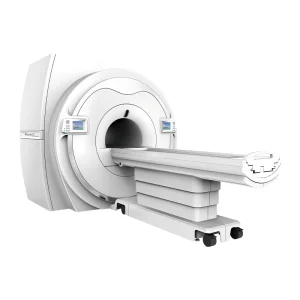
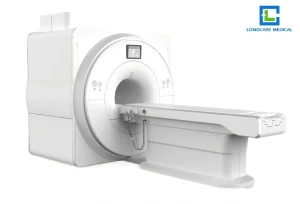
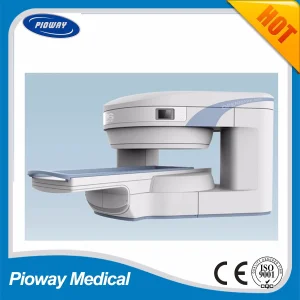
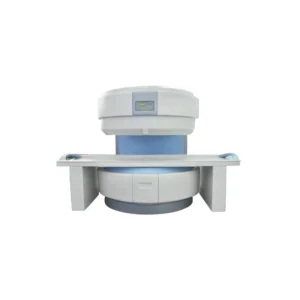
In addition, Aert Medical is actively developing a low-field mobile MRI, which is not only compact, with short scanning times, but also offers complete scanning sequences and high image quality, enabling quick diagnosis of the head, spine, joints, and breast. Our upcoming ultra-low-field head mobile MRI will be widely used in neurosurgical operating rooms to provide precise surgical navigation and diagnostic support for stroke patients.
Global Strategy and Collaboration
Aert Medical's subsidiary, Wenzhou Aert Microelectronics Technology Co., Ltd., specializes in the design and development of image sensors, gathering a team of experienced experts in the field. The CMOS flat-panel detectors currently under development will provide strong support as core components for mobile CT devices. Additionally, the photon counting detectors under development are at the forefront of global technology, and their successful development will position Aert Microelectronics among the leading companies in medical chip R&D.
Mission and Vision
We adhere to the philosophy of "Excellence in Medical Devices, Integrity in Protecting Life" and actively respond to the "Healthy China" initiative. Aert Medical is committed to improving diagnostic capabilities at the grassroots level of healthcare, enhancing the construction of medical alliances in urban and rural areas, and promoting the sharing of medical resources at all levels. We strive to meet the healthcare needs of people across different regions and continue to contribute to the global advancement of the medical industry.
Future Outlook
Aert Medical combines technological innovation with humanistic care, continuously focusing on product breakthroughs and market expansion. We aim to become a global leader in mobile medical equipment manufacturing, promoting the widespread adoption of intelligent medical devices, and making significant contributions to the development of global healthcare.
How Global Procurement Managers, OEM Partners, and Hospital Systems Assess Factory Competency
| Evaluation Metric | Industry Standard Threshold | Advanced / Tier 1 Benchmark | Impact on Clinical Outcomes |
|---|---|---|---|
| Metallurgical Precision | AISI 316L / 420 Stainless Steel | Titanium Grade 5 (Ti-6Al-4V ELI), Nitinol Memory Alloys | Prevents micro-fractures, reduces instrument weight by 40%, and extends autoclave life. |
| Surface Finish & Passivation | Ra < 0.4 µm, Standard Citric Passivation | Ra < 0.05 µm, Electro-polishing, DLC (Diamond-Like Carbon) Coating | Eliminates bacterial adhesion sites, improves corrosion resistance during repetitive sterilization. |
| Cleanroom Manufacturing | ISO Class 8 (100,000) Assembly | ISO Class 5/7 Cleanroom with Automated Ultrasonic Bio-burden Removal | Guarantees minimal pyrogen levels and ultra-low particle contamination for invasive instruments. |
| Diagnostic System Integration | Basic Sensor Mounting Brackets | Embedded CMOS Sensors, Optical Tracking Spheres, Fiber-optic Channels | Enables real-time surgical navigation, intraoperative CT/MRI synchronization, and robotic feedback. |
| Regulatory Audit Compliance | ISO 13485:2016 Certification | Full FDA 510(k) Pre-clearance, MDR (EU) 2017/745 Technical Documentation | Accelerates global procurement approval cycles and minimizes market entry regulatory risks. |
Understanding the Key OEM/ODM Pillars Shaping Modern Surgical Hardware Production
Leading factories utilize high-precision 5-axis Swiss-type CNC lathes and micro-EDM (Electrical Discharge Machining) setups. This allows for intricate geometries in micro-forceps, laparoscopic scissors, and spinal retractor components with tolerances under ±0.002 mm.
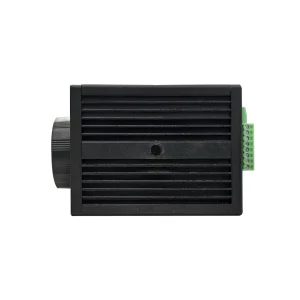
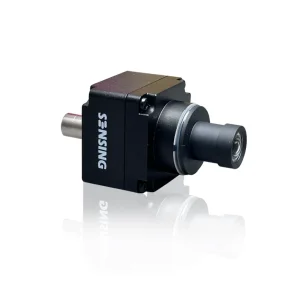
As operating rooms move toward image-guided interventions, top factories maintain dedicated optoelectronic assembly lines. These produce specialized GMSL camera modules, high-speed rolling shutter vision engines, and infrared tracking assemblies essential for neurosurgical and dental navigation systems.
Distinguished manufacturing facilities combine core mechanical surgical tooling with advanced radiation or magnetic resonance hardware. Innovations such as low-field head MRI units and CBCT-spiral hybrid CT scanners provide surgeons with immediate feedback directly in the sterile zone.
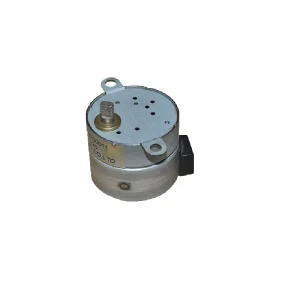
Surgical robotics and automated diagnostic devices rely on specialized permanent magnet gear-box stepping motors. Premium manufacturing units focus on producing low-noise, high-torque micro motors capable of withstanding strict thermal and electromagnetic requirements.
Integrating PEEK (Polyether ether ketone), specialized bio-resins, and 3D printing scanning systems allows modern suppliers to craft custom surgical implants, patient-specific cutting guides, and ergonomic handles tailored to individual hand sizes.
Using 3D laser coordinate measuring machines (CMM), optical comparators, and automated bio-burden testing, advanced factories guarantee 100% batch consistency and complete material heat-number traceability from raw ingot to final sterile packaging.
Strategic Procurement Insights for Hospital Networks, Distributors, and Medical Device OEMs
When selecting a manufacturing partner among top advanced surgical instruments factories, procurement executives must balance unit cost against total cost of ownership (TCO), quality risks, and long-term regulatory compliance. Partnering with suppliers capable of providing modular diagnostic components alongside mechanical tooling significantly lowers systemic integration costs.
Define mechanical drawings, surface roughness thresholds, and optoelectronic interface requirements.
Execute small-batch sampling, cytotoxicity checks, cleanroom bio-burden analysis, and autoclave durability trials.
Compile Technical Master Files (TMF) to support FDA 510(k), CE mark under EU MDR, or NMPA registration.
Scale up output with automated inspection, climate-controlled packaging, and fast-track custom clearing support.
Anticipating the Next Decade of Breakthrough Innovations in Surgical Hardware and Intraoperative Imaging
Transitioning from traditional energy-integrating detectors to photon-counting detectors (PCD). PCD enables ultra-high spatial resolution, significantly lower radiation exposure during intraoperative CT scans, and enhanced soft-tissue differentiation in neurosurgery.
Eliminating liquid helium dependence allows lightweight mobile superconducting MRI systems to be deployed inside standard operating rooms and mobile medical vehicles without complex cryogen venting infrastructure.
Merging high-speed camera sensors with deep learning edge computing (such as NVIDIA Jetson Orin platforms) to deliver real-time collision detection, auto-segmentation of critical nerves/vessels, and automated tool identification during complex robotic procedures.
Expert Answers to Critical Questions Regarding Surgical Instrument Manufacturing and Procurement
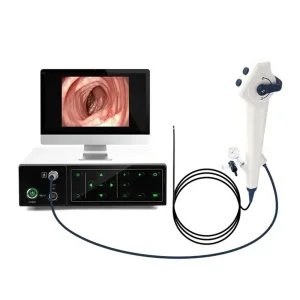
Explore additional high-performance medical hardware, MRI scanners, endoscopes, and diagnostic tools.